


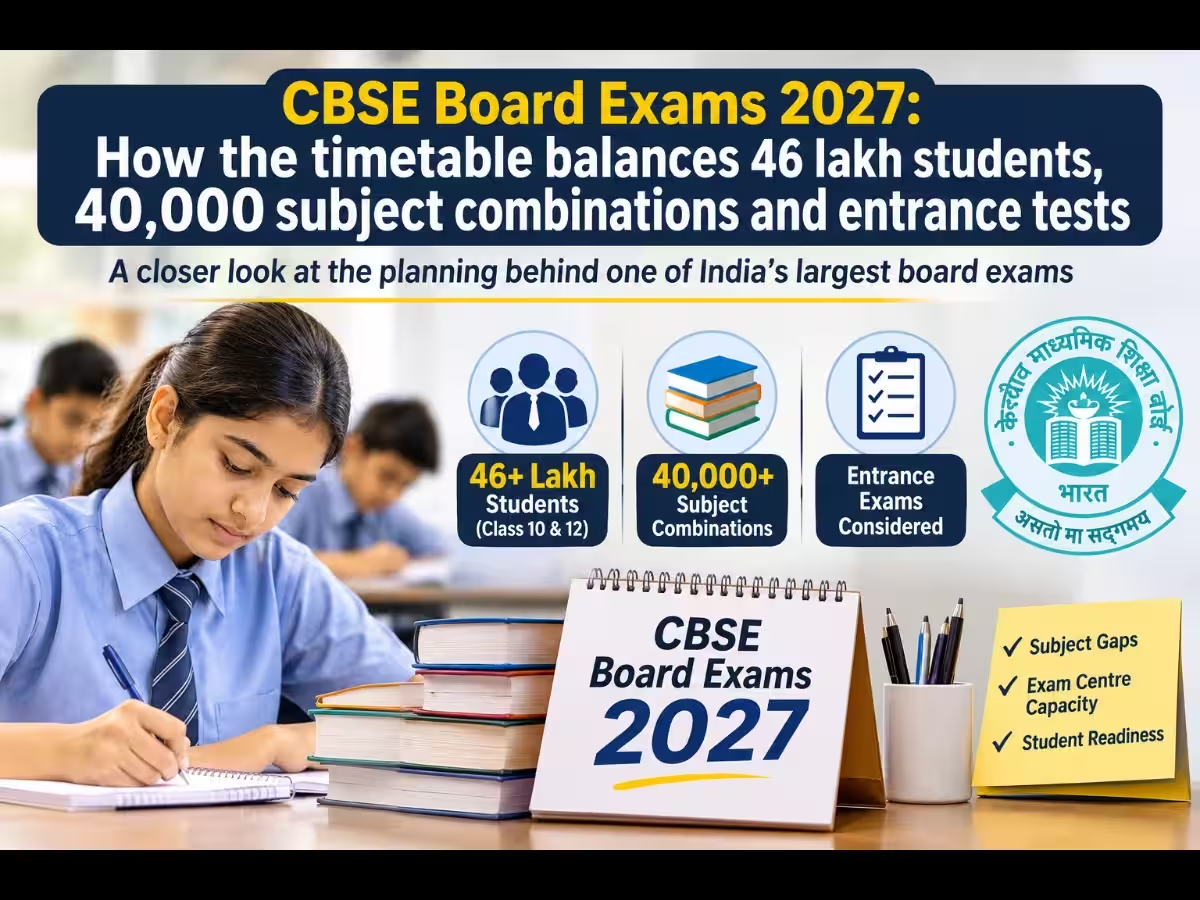
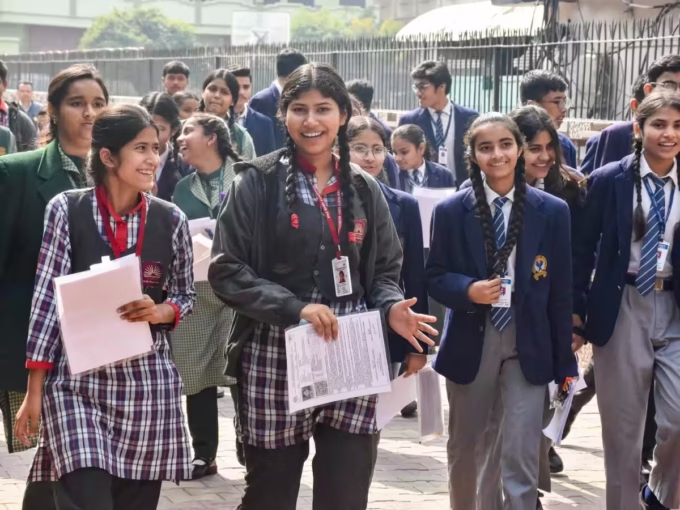
The Central Board of Secondary Education (CBSE) faces a complex scheduling exercise every year: preparing a common examination calendar for millions of students, hundreds of subject options and a wide range of academic combinations, while ensuring that students do not have to appear for two examinations on the same day.The challenge is reflected in the numbers for the 2027 board examinations. More than 46.3 lakh students have registered across Classes 10 and 12, with over 26.5 lakh candidates in Class 10 and more than 19.8 lakh in Class 12. The examination schedule covers 83 subjects in Class 10 and 121 in Class 12.CBSE says it considered more than 40,000 subject combinations while preparing the datesheets for the two classes. The objective was to ensure that examinations for any two subjects selected by the same student do not clash.The datesheets, released on November 6, 2026, are scheduled to take effect from February 16, 2027, when examinations for both classes begin. All papers will commence at 10:30 am.The 40,000-combination scheduling challengeThe number of subject combinations is central to understanding why preparing the CBSE timetable involves more than allocating dates to individual papers.Students in Classes 10 and 12 have different subject choices, including languages, academic disciplines and vocational courses. The board must account for the combinations selected by individual candidates so that students opting for multiple subjects can sit for each examination without a timetable clash.CBSE said the final schedule was prepared using subject-combination data submitted by schools through the List of Candidates (LOC) process. The timely submission of LOCs enabled the board to work with the final data on students’ subject choices before finalising the datesheets.The board has referred to the exercise of accommodating more than 40,000 subject combinations in its previous examination planning as well. The figure, therefore, is not a new development for 2027, but an indication of the scale of coordination involved in preparing the annual schedule.Entrance examinations also shape the Class 12 calendarFor students appearing in Class 12, the board examination timetable is closely linked to the next stage of their academic journey.Many candidates prepare for university admissions and competitive entrance examinations alongside their board papers. CBSE said it considered the tentative schedules of major entrance examinations while preparing the 2027 datesheet and made efforts to complete the board examinations well before these tests.The Class 12 examinations will begin with Physics on February 16 and conclude on April 9. Major papers include Chemistry on February 27, Mathematics on March 9, Economics on March 16, Political Science on March 19 and Biology on March 25.The sequencing gives students different preparation intervals depending on their chosen subjects. For instance, there are 11 calendar days between Physics and Chemistry, and 10 days between Chemistry and Mathematics. However, the intervals vary later in the schedule: Computer Science and Information Technology are scheduled for March 31, followed by Business Studies on April 1.These are intervals between examination dates, not a uniform preparation window for every student. The actual gaps depend on the subjects a candidate has selected.By considering entrance examination schedules, CBSE is attempting to coordinate the board examination calendar with the admission-related commitments that follow for Class 12 students.Examination-centre capacity and school functioningThe scheduling exercise also involves logistical considerations beyond students’ preparation.CBSE said it considered the number of candidates appearing at individual examination centres on particular days to facilitate the smooth conduct of examinations. The distribution of candidates across dates is an important part of managing the examination process at scale.The board has also taken into account the impact of examinations and subsequent evaluation work on regular school functioning. It said the timetable was planned to minimise the prolonged absence of teachers from schools during the evaluation process.This brings another consideration into the scheduling exercise: board examinations must be conducted without unnecessarily disrupting the academic calendar for students who are not appearing for the examinations.The board has also said it provided adequate gaps between examinations for subjects commonly opted for together. This is intended to give students taking related or frequently paired subjects sufficient time between papers.What the 2027 examination calendar looks likeBoth Class 10 and Class 12 examinations will begin on February 16, 2027. However, the two schedules have different end dates.Class 10 examinations will conclude on March 9, covering a 22-day calendar window. The first paper is Painting on February 16, followed by Mathematics Standard and Mathematics Basic on February 17. The major papers include Science on February 22, English on February 26, Hindi on March 3 and Social Science on March 8.The Class 12 examination window extends until April 9, covering 53 calendar days. Alongside the core academic subjects, its schedule includes languages, vocational subjects, skill-based courses and specialised papers.Across both classes, the datesheets list 204 subject entries in total: 83 for Class 10 and 121 for Class 12. This is the combined number of subject entries listed for the two examinations, not a count of 204 unique subjects.CBSE has released the datesheets 101 days before the examinations begin, according to its notification. The board said the advance announcement is intended to help students plan their preparation, while giving schools, families and examination centres time to organise their schedules.A timetable involving more than students and examination datesThe 2027 datesheet illustrates the multiple requirements that go into planning a national board examination calendar. Student subject choices, preparation gaps, entrance examination schedules, centre-level logistics and the availability of teachers during evaluation all form part of the exercise.For students, the practical implication is to look beyond the first and last dates of the examination window and check the intervals between the papers they have actually registered for. For schools, the schedule provides a framework for planning academic activities and examination-related responsibilities.With more than 46 lakh registrations across the two classes, CBSE’s challenge is not simply to fit 204 subject entries into a calendar. It is to coordinate thousands of possible subject combinations while keeping the examination process manageable for students, schools and centres.











Leave a comment