



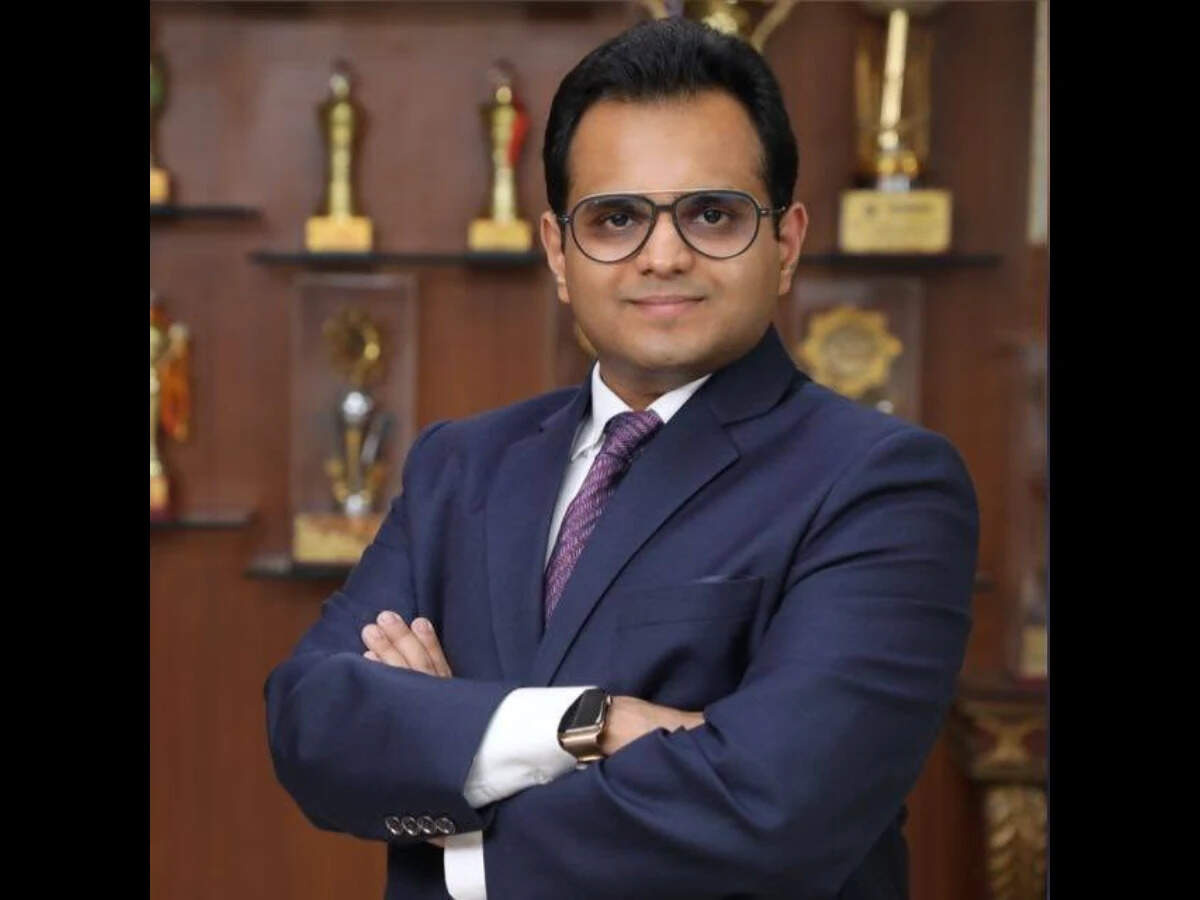
By Naman Jain
India’s demographic dividend is considered one of the biggest advantages of the country. Young individuals below 35 years of age account for 65% of the country’s population. However, it can become a liability for the country if today’s education continues to produce educated graduates instead of skilled workers.
The paradox lies in the fact that every year millions of student’s graduates, while companies faced in various sectors from manufacturing to healthcare and IT experience difficulties in finding appropriate candidates. There is sufficient pool of talent in the country, but a strong gap in employability.
The problem starts from schools. Degrees don’t equal employability. Traditionally, in India the educational system provides student with marks and exams instead of necessary skills which would meet the requirements of the changing economy.
The gap of employability becomes more evident today. The situation with employability of the youth has improved, but it is too far from perfection, as experts acknowledge that there is a serious lack of communication, problem solving, teamwork as well as digital skills that employers need from their employees. In the meantime, industry reports highlight that skill gap is the biggest barrier to hiring and not the absence of jobs.
With the arrival of technology such as artificial intelligence and automation, knowledge of technology is not sufficient anymore. Employers prefer candidates with skills such as adaptability, creativity, and teamwork instead of candidates who only possess technical knowledge. Problem arises before college students face many learning gaps even before they enter college.
According, to the Annual Status of Education Report (ASER) majority of students struggle with basic reading and arithmetic even after several years of schooling. The continuous lack of these basic skills creates cumulative problems, and lowers higher cognitive skills.
Schools often stress the need to finish the syllabus rather than cater to students’ inquisitive minds. Students prepare for exams rather than solve problems. There is hardly any career education or industry exposure offered by the school. Additionally, opportunities for experiential learning remain limited. As a result, students receive college degrees but lack workplace readiness. Schools should prepare students for employment It’s high time that the talk about employment must begin in schools, not colleges.
From academic scores to employability skills
The National Education Policy (NEP) 2020 acknowledges the transition towards competency-based, experiential and multidisciplinary education as well as the introduction of vocational education to kids at an early stage. Now the key task is to start putting this new approach into practice.
Schools have to come up with a new definition of success, which should not be limited to academic exams scores. Communication skills, financial literacy, digital literacy, coding, design thinking, entrepreneurship, and project-based education should be an essential part of education and not a mere supplementary option. Students ought to be involved in real-life tasks, work in teams, make presentations and collaborate with adult professionals in order to gain experience, improve their skills, and prepare for the job market.
Bridging the school-industry gap
Industry should be part of education. Education should not be cut off from the economy which it serves. It is necessary for schools to enter into partnerships with businesses, universities, and startups. Schools should host guest classes, mentorship programs, innovation competitions, internships, job shadowing, and real projects. Countries that show the best results in the education-employment system always show a close collaboration between schools and companies. India should adopt a similar model of teaching as an evolution transformation.
Educators are true catalysts of change. The success of any educational reform initiative fundamentally depends on the power put into the hands of teachers. The role of teachers today is to prepare students for jobs that don’t even exist yet in many instances, which makes the investment into teachers’ professional growth and training in new technology and teaching methods a must.
Professional development needs to concentrate not only on subject content, but also on giving teachers the ability to teach inquiry, critical thinking, and creativity. While technology can facilitate the transition, it cannot replace the passion and enthusiasm of teachers.
Using technology to enable, not replace, learning
Digital tools, AI-tailored education, virtual labs, and adaptive testing have great potential to level the playing field. What is important is that technology serves the learning process rather than digitalises traditional processes. Technology should be used by students for creation and problem-solving rather than mere content consumption. Equally important is making sure that digital inequality does not exist so that the region or social background will not have any impact on people’s future opportunities.
Many students finish their education without having any idea regarding the new careers that may lie ahead for them or the skills necessary for their chosen one(s).
Career counselling must be initiated much sooner than 12th grade. Consequently, students should be introduced to various sectors such as renewable energy, healthcare, advanced manufacturing, fintech, space technology, creative industries, artificial intelligence, etc. Understanding the changing career landscape helps people make informed decisions and helps avoid mismatches between education and employment.
India’s objective of becoming a developed country by 2047 is not only related to job creation, but also to creating people who have been trained for these jobs. The World Bank has again and again stated that aligning education to the labour market is key to enhancing productivity and promoting economic growth. Programs that integrate technical education with employability skills yield significantly better results in the labour market compared to conventional education.
The crisis of employability is not a problem tied to colleges, rather it is a problem that schools have to deal with. It is true that degrees always make a difference. But they are just the start in a fast-paced changing world. The schools that will shape the future of India are not those churning out the maximum number of toppers, rather they are the ones producing effective communicators, able leaders, analytical thinkers, flexible learners, and effective problem solvers. The real criteria of education is not the fact that students have a degree; rather it is whether they possess skills to flourish in life upon graduation.
– The author is the Vice Chairman of Silverline Prestige School, Ghaziabad
DISCLAIMER: The views expressed are solely of the author and ETEducation does not necessarily subscribe to it. ETEducation will not be responsible for any damage caused to any person or organisation directly or indirectly.














Leave a comment