


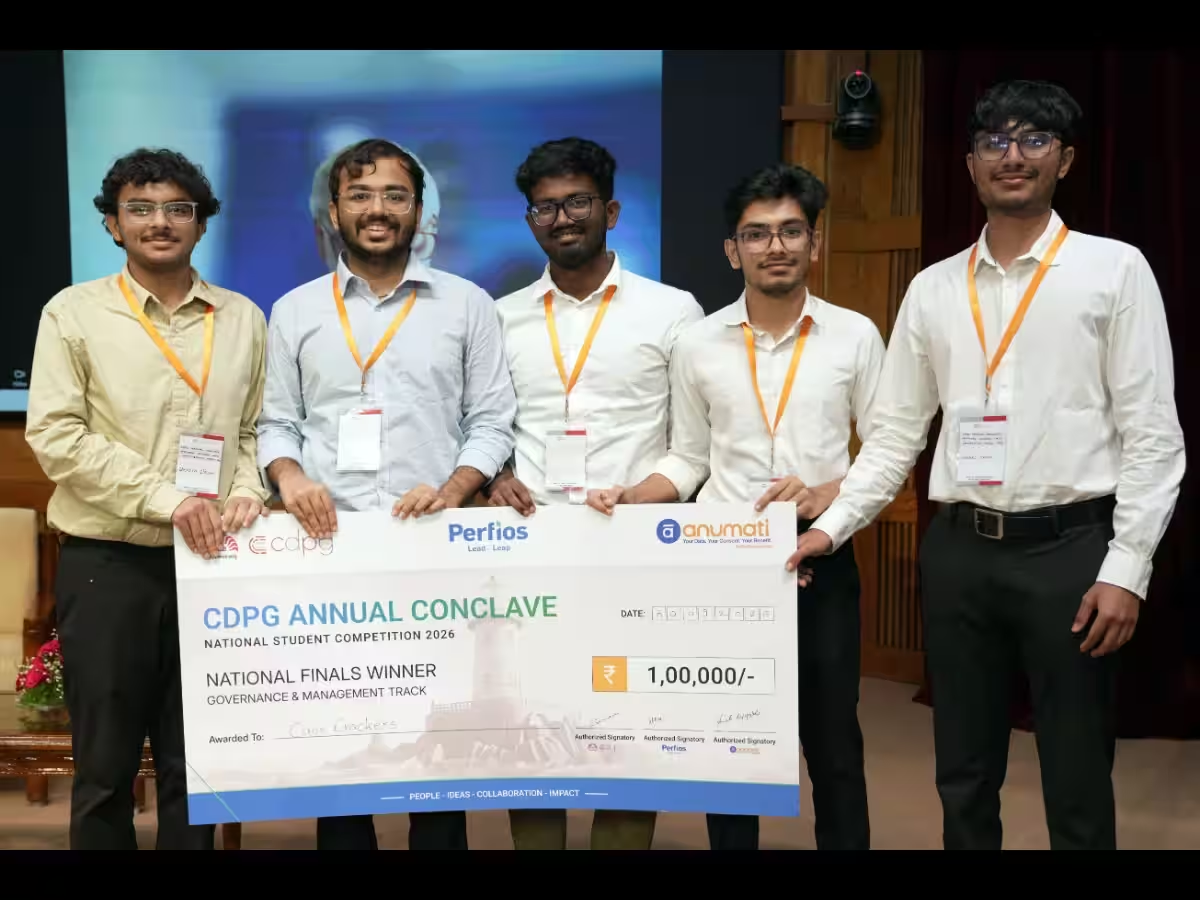
Students from IIM Bangalore and Dhirubhai Ambani University emerged winners in the inaugural National Student Case Competition 2026, hosted by the Center for Digital Public Goods (CDPG), IIM Bangalore, with support from Perfios and Anumati Account Aggregator.
Nine finalist teams from across India competed in three tracks — Technology & Design, Policy & Regulation, and Governance & Ecosystem — with the competition focusing on how India’s Digital Public Infrastructure (DPI) can be designed, governed and built to create public value.
The finalists were selected from 450 teams comprising 2,250 students, with 146 submissions received in Technology & Design, 127 in Policy & Regulation and 177 in Governance & Ecosystem.
Winners across three tracks
TrackWinning teamInstitutionSolution
Technology & DesignTeam Champagne-PapiIIM Bangalore PGPSAHAY
Policy & RegulationTeam PungibunchIIM Bangalore BBA (DBE)Anumati
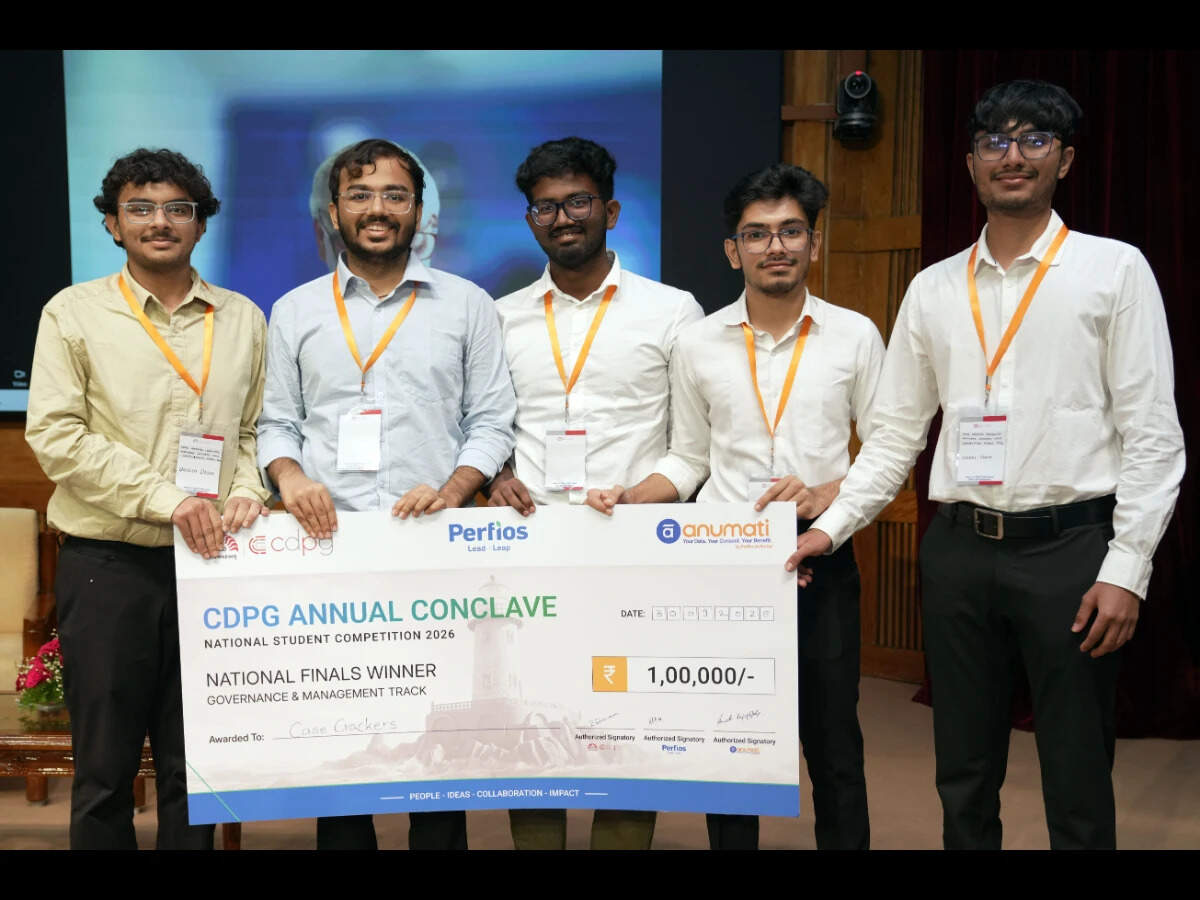
Governance & EcosystemTeam Case CrackersDhirubhai Ambani UniversitySambhal
Each winning team received a cash prize of ₹1 lakh.
Team Champagne-Papi from IIM Bangalore’s PGP programme won the Technology & Design track with SAHAY, a conversational financial wellness service using WhatsApp to help households anticipate and prepare for major expenses over a three-month period.
Team Pungibunch from IIM Bangalore’s BBA (DBE) programme won the Policy & Regulation track with Anumati, which combines consented financial data with a structured approach to identifying risks and prioritising financial guidance.
In the Governance & Ecosystem track, Team Case Crackers from Dhirubhai Ambani University won with Sambhal, a consent-first financial timing service built on India’s Account Aggregator infrastructure to help households make more timely financial decisions.
Team Nexus from IIT Jodhpur received a ₹50,000 Jury’s Choice Award for Paarivar CFO, a solution developed in the Technology & Design track.
The other finalists included teams from Thapar Institute of Engineering and Technology, Rajiv Gandhi Institute of Petroleum Technology, IIM Sambalpur and Nirma University.
Speaking about the inaugural competition, Prof. R Srinivasan, Chairperson, CDPG and faculty of Strategy at IIMB, said: “With the first edition of the CDPG National Student Case Competition, we wanted to introduce students to the many dimensions of DPI and, in the process, build a deeper sense of curiosity and pride in what India has created. It was important to us that students encounter DPI not only as a technology story, but as a space where policy, governance, technology and design come together and perhaps see nation-building as a career in which they can play a role. That thinking lent itself to the three tracks of the competition. We thank our partners for helping us bring this vision to life and for encouraging structured thinking through the case study method.”
The competition was conducted in two stages. In Stage I, teams examined the implications of extending Digi Yatra beyond its original airport-access context, considering issues including privacy, consent, purpose limitation, interoperability, governance, commercial use and public value.
In Stage II, teams moved from analysing a DPI-related problem to developing a DPI-enabled solution. They were asked to design a customer-focused financial wellness service for an aspiring middle-class household using the Perfios-Anumati sandbox and consented financial information.
Teams had to demonstrate a working prototype or service flow, use sandbox APIs and representative data, and address issues including consent, privacy, data protection, accessibility, regulatory considerations, scalability and business viability.
Trust and privacy were also prominent themes among participants. Around 44% of teams referred to trust and 43% to privacy when describing what attracted them to the competition. Other themes included consent, citizen interests, convenience, innovation, interoperability, security and ecosystem management.
Jury on the finalist solutions
The Stage II jury comprised Prof. Deepak Chandrashekar, faculty of the Strategy area at IIMB; Srikanth Rajagopalan, CEO, Anumati by Perfios AA; Sundar Natarajan, Head – Strategy, Communications & Institutional Relations, Digi Yatra Foundation; and Ashish Mittal, DigiGo.
Prof. Deepak Chandrashekar said the diversity of finalists across disciplines was among the notable aspects of the competition. “What stood out to me was that we saw students from management institutes making it through in the Technology & Design track, and engineering students emerging in Policy & Regulation and Governance & Ecosystem. It was your curiosity about the problem that drove the work.”
He added that the final evaluation focused on whether teams had identified a compelling problem, developed a credible business case and created a solution that generated value, while also examining their use of APIs and ability to bring stakeholders together.
Srikanth Rajagopalan, CEO, Anumati by Perfios AA, said the teams demonstrated significant effort and rigour in developing and presenting their ideas. He encouraged participants to consider taking their propositions beyond the competition and exploring opportunities to build products and startups around them.
On Digi Yatra’s involvement in the first stage, Sundar Natarajan, Head – Strategy, Communications and Institutional Relations, Digi Yatra Foundation, said: “As DPI continues to evolve, technology, trust, responsibility and purpose must remain central to how we design and build digital ecosystems. Digi Yatra’s experience in enabling seamless airport access offers a valuable context for exploring these questions, particularly as conversations around digital identity and its potential applications evolve.”
Ashish Mittal, DigiGo, also commended the teams for their preparation and propositions, while highlighting B2B customers as another potential route to market for DPI-enabled solutions.
The judging framework assessed teams on their use of DPI and Account Aggregator data and APIs, strength of the customer problem and value proposition, financial interventions, trust and privacy, regulatory design, business and economic viability, technical feasibility, scalability and quality of demonstration.
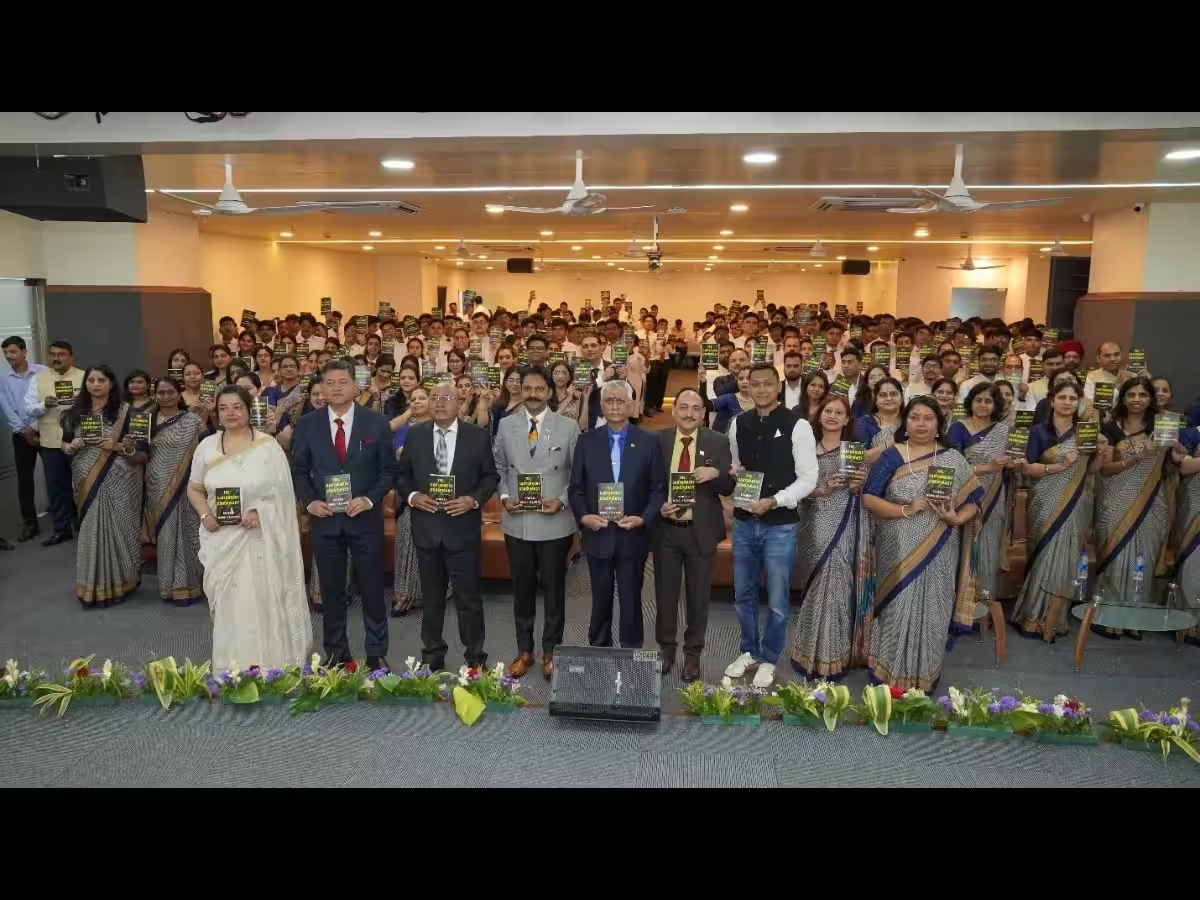
The competition concluded at the CDPG Annual Conclave 2026, where the three track winners and the Jury’s Choice Award recipient were announced.















Leave a comment