


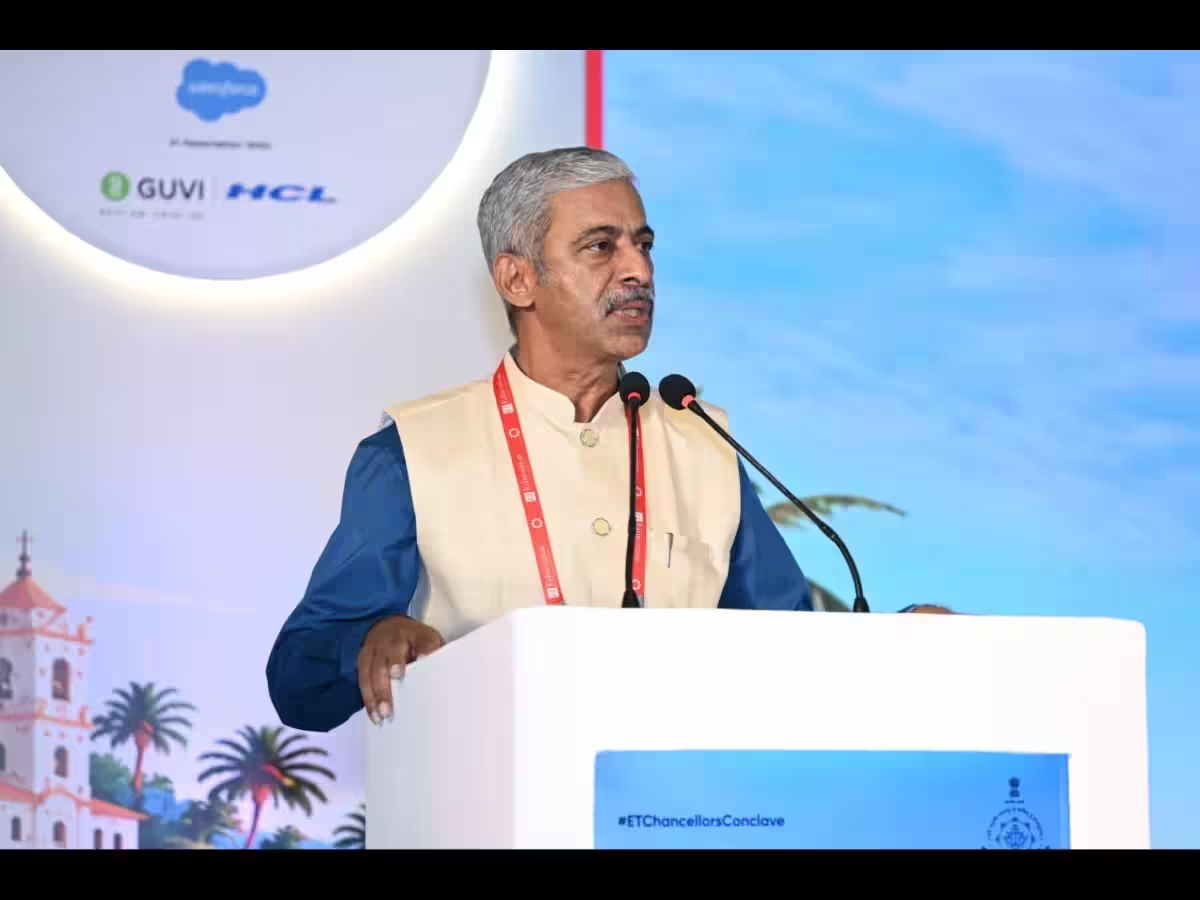
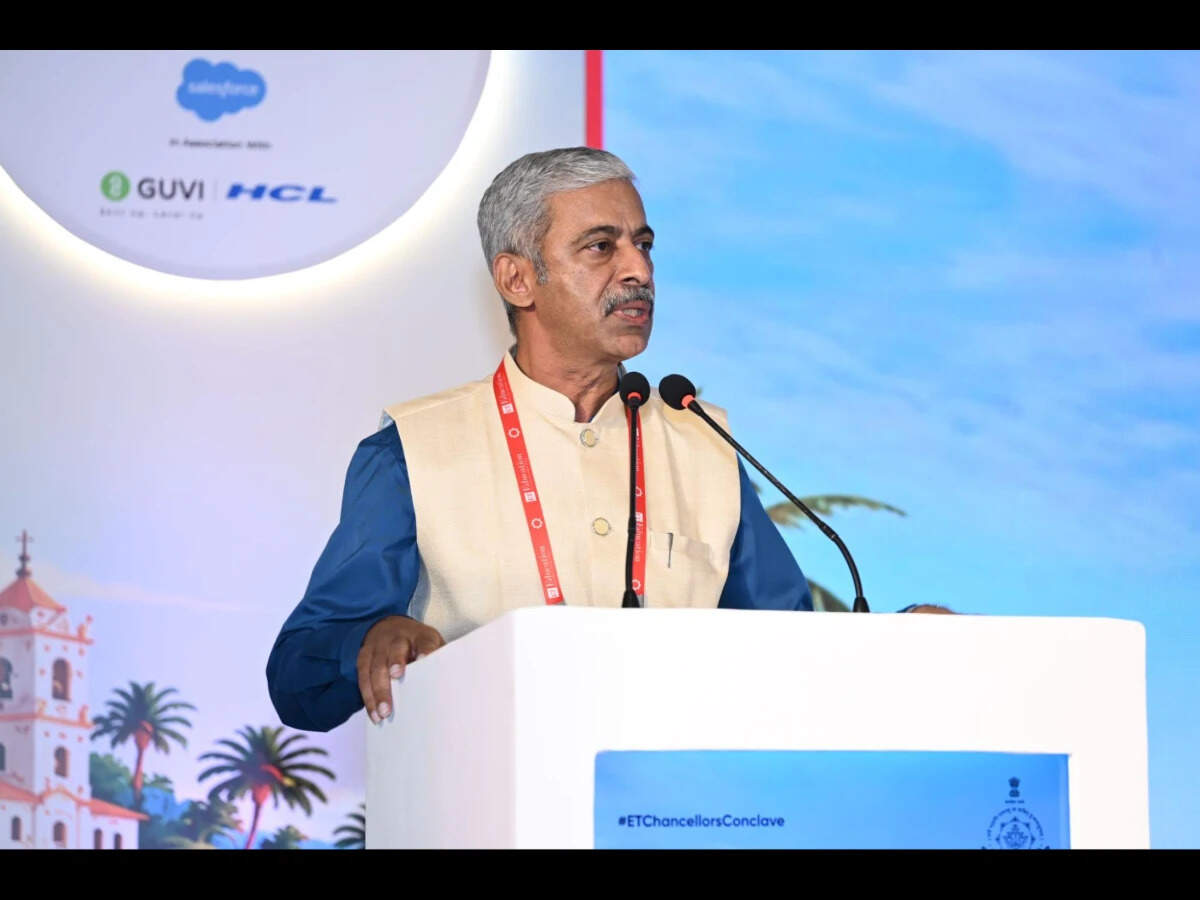
GOA: Research opportunities must extend beyond established institutions and specialised disciplines to reach students, teachers and emerging researchers across the education system, said Prof Savio P. Falleiro, Managing Director, Goa State Research Foundation (GSRF), Government of Goa.
Delivering a keynote address at the ETEducation Chancellors’ Conclave 2026, Falleiro outlined Goa’s efforts to build a more inclusive research ecosystem through targeted funding, interdisciplinary projects and structured mentorship.
He emphasised that while India has made considerable progress in research, scientific inquiry remains concentrated in select disciplines and institutions, limiting opportunities for students and educators from diverse academic backgrounds.
Expanding research beyond conventional disciplines
Falleiro explained that the Goa State Research Foundation was established through state legislation, drawing inspiration from the National Education Policy 2020 and the need to strengthen research across higher education.
The foundation operates through research grants, fellowships and doctoral and postdoctoral support, alongside initiatives designed to encourage wider participation in scientific and academic inquiry.
Highlighting one of its key programmes, he described an interdisciplinary research initiative that brings together students, faculty and researchers from fields including engineering, humanities and medicine to identify and address local challenges.
The objective, he explained, is to connect academic research with practical solutions that contribute to Goa’s development.
Preserving traditional knowledge through research
Another major initiative focuses on documenting traditional skills and occupations that are gradually disappearing across Goa.
Falleiro said the programme aims to preserve indigenous knowledge, revive traditional practices and explore opportunities for commercialisation that could improve livelihoods.
By bringing traditional knowledge into structured research frameworks, the foundation seeks to ensure that locally developed skills and practices are not lost to future generations.
Mentorship and funding key to building research culture
Beyond financial assistance, Falleiro highlighted the importance of providing researchers with guidance throughout the research process.
He shared that the foundation supported nearly 4,000 final-year undergraduate students over the past year in refining their research topics and developing academic projects, contributing to publications in reputed journals.
He stressed that research opportunities must also be available to contractual teachers, early-career academics and students who lack access to funding or experienced mentors.
According to Falleiro, developing scientific temper requires creating an environment where curiosity and research participation are encouraged from the school level onwards, rather than being restricted to advanced researchers.
The long-term success of research policy, he suggested, lies not merely in funding established scholars but in enabling every interested student and educator to participate in knowledge creation and solve meaningful problems.













Leave a comment