


New Delhi: The University of Toronto is expanding its India engagement through academic partnerships, research collaboration and student mobility, with its collaboration with Jio Institute adding to the university’s broader India strategy.
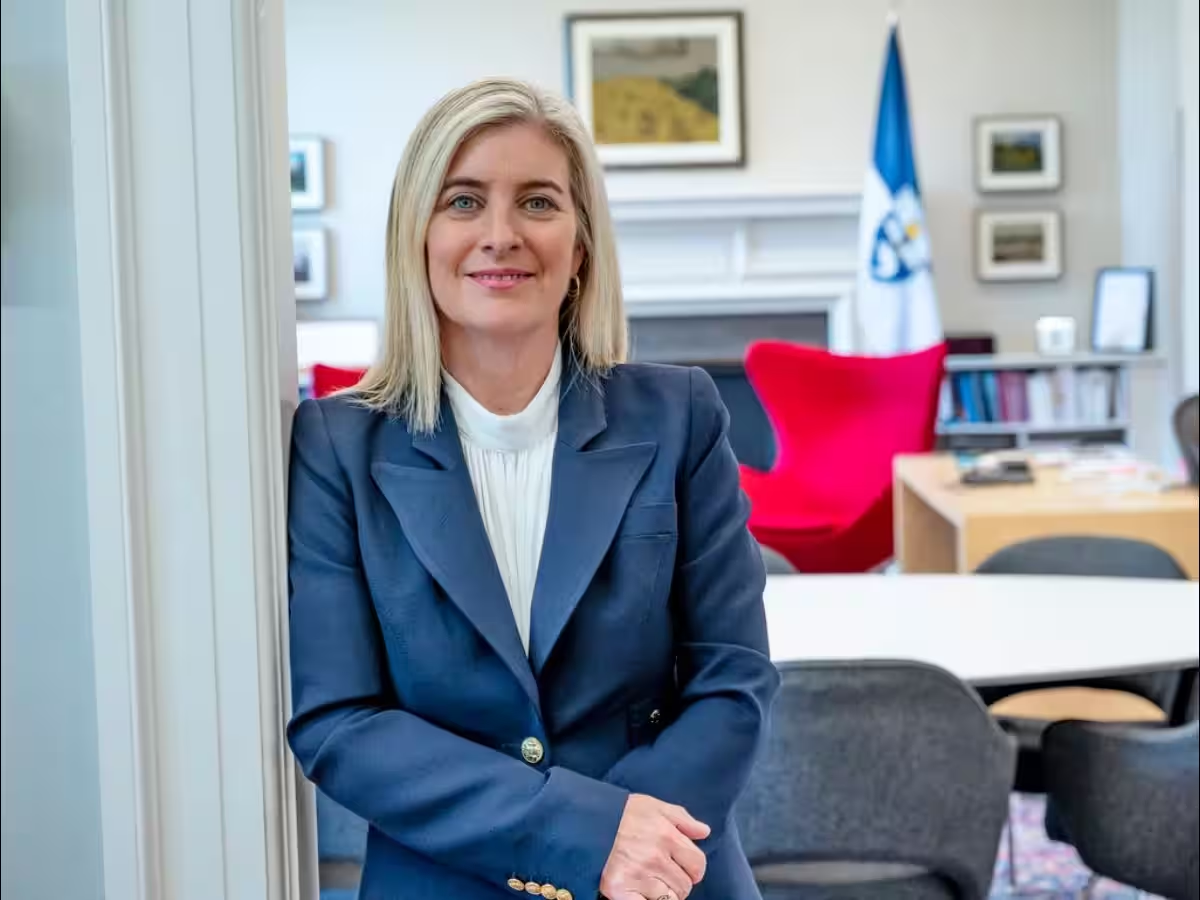
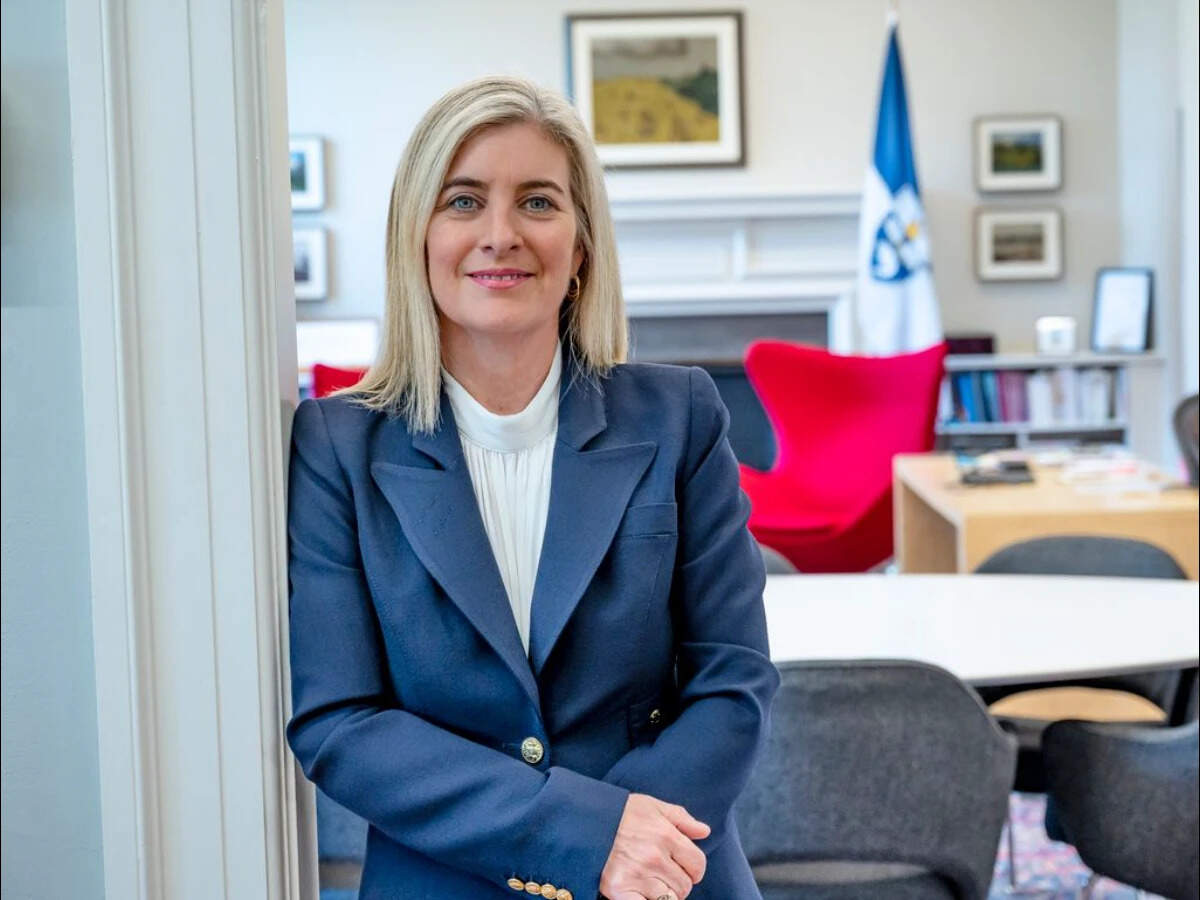
The university has also launched a C$100 million Presidents’ Impact Scholarship programme to support 50 PhD scholars with C$80,000 a year for four years. The first cohort will begin in September 2027. In an exclusive interaction with ETEducation during her recent visit to Delhi, Professor Melanie A. Woodin, President of the University of Toronto, discussed the university’s engagement with India, including its collaboration with Jio Institute, research opportunities in AI and healthcare, graduate mobility and the changing role of AI in doctoral education.
U of T has academic relationships with Indian institutions including the Indian Institute of Science, IIT Bombay, IIT Madras and Ashoka University.
‘AI is one of our university’s core strengths’
Q: The University of Toronto is expanding its engagement with India. What are the key areas where you see the greatest potential for deeper India-Canada research collaboration?
Professor Melanie A. Woodin: The University of Toronto is home to the godfather of AI, Nobel Prize winner Geoffrey Hinton, and an incredible AI ecosystem has developed in Toronto. AI is one of our university’s core strengths.
U of T researchers collaborate with talented Indian researchers working at the forefront of AI, particularly on AI applications that will benefit society. The application of AI to healthcare is one of the key areas of collaboration right now. We are hosting a joint workshop on this topic with the Indian Institute of Science this week.
We also see great opportunities for graduate student mobility between our two countries, particularly in AI and related fields.
We also continue to support research collaboration on sustainable cities through our U of T India Foundation, our Tata Trusts-funded research and entrepreneurship centre based in Mumbai. Through the Foundation, U of T researchers work with partners across India on cutting-edge research projects that aim for impactful solutions to urban challenges across India.
‘The MoU lays the groundwork for more student exchanges’
Q: You are signing an MoU with Jio Institute. What specific areas of research or education do you hope this partnership will develop
Professor Melanie A. Woodin: The MoU lays the groundwork for more student exchanges and collaborations between the newly formed Jio Institute and U of T. It’s one of many such relationships we have with universities in India, including the Indian Institute of Science, IIT Bombay and IIT Madras, and Ashoka University.
India as a research partner
Q: Does U of T see India primarily as a source of global talent, or increasingly as an equal partner in research and innovation?
Professor Melanie A. Woodin: Please see response above for some examples of the ways that we routinely work collaboratively with Indian partners to co-create research that is having impact in both India and Canada.
U of T will use its three campuses as a living lab for responsible AI
Q: AI is changing how students learn and researchers work. What are the biggest changes U of T is making in response to this shift
Professor Melanie A. Woodin: One of my first commitments as President is to advance responsible AI adoption at scale. To do this, U of T will use its three campuses as a living lab for responsible AI adoption.
We recently launched an ambitious partnership with Cohere, a Toronto-based global leader in AI, started by U of T alumni, to help in this regard. It will allow us to connect trusted information across university systems, coordinate complex workflows and help faculty, librarians, staff and students work faster, access services more easily and make better-informed decisions, while keeping sensitive data secure.
As we go forward, we will draw on leading interdisciplinary research, evaluate the impact and share what we learn with government, public-sector organizations, private industry and others.
‘PhD students need to know how to use AI as a research tool’
Q: With AI taking over more routine research tasks, how do you think doctoral education needs to change?
Professor Melanie A. Woodin: When AI tools first became widely available, we launched a task force and it examined this important question. It identified that PhD students need to know how to use AI as a research tool, critically evaluate its outputs, recognize its limitations, question its assumptions and determine when it is and is not the right tool for the research.
At the same time, doctoral programs will need to preserve opportunities for students to acquire foundational research skills that help develop the expertise, judgment and independence expected of a scholar, even when AI can perform those activities more efficiently.
Why U of T wants to rethink doctoral education
ETEducation: U of T is launching a C$100 million global PhD scholarship programme. What gap in current doctoral education is this programme designed to address?
Professor Melanie A. Woodin: The biggest challenges facing society today don’t fit neatly within a single academic discipline. Climate change, artificial intelligence, health, economic inequality and other complex issues increasingly require researchers who can work across traditional boundaries and translate knowledge into real-world impact.
The traditional PhD is structured around deep specialization within a particular discipline and sets graduates up well for a career in academia. The Presidents’ Impact Scholarship program is designed to complement that disciplinary depth with a different model of doctoral education.
Scholars will pursue interdisciplinary co-supervision and undertake an external experience, such as an internship, government partnership or international placement. They’ll also be brought together in cohorts focused on a major societal challenge, creating opportunities for researchers from very different fields to work alongside one another.
There’s a global talent dimension as well. Competition for exceptional PhD students is intense, particularly from very well-funded universities. The C$80,000-a-year scholarship gives U of T the ability to compete internationally for outstanding researchers while providing them with the skills, networks and real-world experience to maximize the impact of their work.
The larger ambition is to develop a 21st-century model of doctoral education that combines academic excellence with interdisciplinarity, collaboration and engagement beyond the university.
Measuring the impact of the new PhD model
Q: The programme emphasises interdisciplinary research and real-world impact. How will U of T identify and measure that impact?
Professor Melanie A. Woodin: Evaluation is built into the program, with assessment beginning by the second cohort.
We’ll look at impact at several levels. For individual scholars, that includes their progress against the objectives of the program and evidence that interdisciplinary collaboration, external engagement and real-world problem-solving are shaping their research and development.
The program itself will also be evaluated by comparing the experiences and outcomes of scholars and faculty participating in it with those outside the program, and by tracking cohorts as they progress through their PhDs.
Ultimately, we’re interested in impact beyond individual accomplishments. One of the program’s objectives is to determine whether combining disciplinary excellence with interdisciplinary co-supervision and engagement beyond the university can help inform the evolution of PhD education more broadly.
‘A doctoral education can allow you to have an impact far beyond academia’
Q: India has a huge pool of highly trained graduates, but relatively few pursue PhDs. What do you think needs to change to make research careers more attractive?
Professor Melanie A. Woodin: A key goal of the Presidents’ Impact Scholarships is to demonstrate that a doctoral education can allow you to have an impact far beyond academia. People with PhDs can become professors and researchers, but they can also become innovators, entrepreneurs and changemakers.
Ilya Sutskever helped pioneer the deep-learning revolution and went on to co-found OpenAI. Roberta Bondar became the first neurologist in space. Jeffrey Osborne and Mark Michael helped found a space-technology company that operates the largest fleet of Canadian-built satellites. All of them earned PhDs from the University of Toronto.
If we want more talented graduates to see research as an attractive career path, we need to make those possibilities much more visible and build them into doctoral education itself.
That means giving PhD students opportunities to work across disciplines, engage with industry, government and communities, develop entrepreneurial skills and see how their expertise can be applied to consequential problems outside the university.
That is what we are trying to do with the Presidents’ Impact Scholarships: combine the intellectual depth of a PhD with the networks, experiences and opportunities to translate that knowledge into impact in many ways.











Leave a comment