


A large battery doesn’t necessarily last for a super-long time.
When comparing the batteries of different devices or analyzing how well your own device performs, you’ll often see two terms: “battery capacity” and “battery life.” While these go hand-in-hand, they are different metrics. Knowing the difference helps you estimate battery performance and be aware of when you need to replace your battery. This applies to smartphones, portable battery packs, laptops and similar.
Battery capacity measures the maximum amount of energy a battery can store; it’s expressed in milliampere hours (mAh) for small devices like phones and power banks, or watt hours (Wh) for larger devices like laptops. Battery life is how long the device can last before it requires recharging, typically measured in hours.
A third metric, battery health, is closely related to capacity. Health is expressed as a percentage of your battery capacity when it was brand-new. This is tied to how many cycles your battery has gone through: one cycle occurs every time your battery goes from 100 percent to zero percent charge (these don’t have to be all at once).
For example, starting with the Google Pixel 8a, Pixel devices are rated to retain up to 80 percent battery capacity for 1,000 full charge cycles. So if you add 100 percent charge to your device daily, you may need a battery replacement in about 2.5 years.
While these battery metrics are all related, there are other factors to consider alongside them.
Battery capacity versus battery life
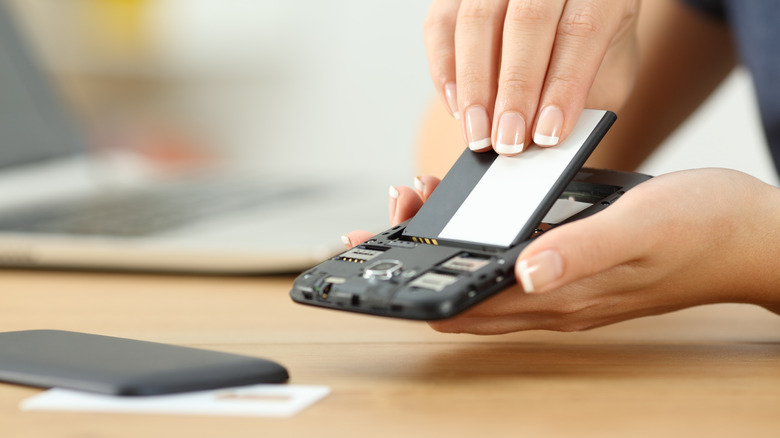
The higher the battery capacity of a device, the more energy it can store, which theoretically increases its run duration per charge (i.e. battery life). So a phone with a 5,000mAh battery should, on paper, last longer than one with a 4,200mAh battery. Similarly, in theory, the capacity of a power bank should indicate how many times it will charge your phone.
For example, an iPhone 18 Pro (US model) has a battery capacity of 4,288mAh, meaning that a 10,000mAh power bank could theoretically charge it a little more than two full times. However, charging isn’t perfectly efficient; you’ll usually see a 20 to 30 percent loss with normal charging. Fast charging and wireless charging generate more heat and thus have even higher loss percentages.
When it comes to real-world battery life, many factors like this are at play. You need to consider how quickly the device consumes energy and how efficient the battery is. If you’re using a laptop with a large battery capacity to play modern games at high graphic settings, its battery will likely deplete faster than one with a lesser battery capacity used only for word processing.
Elements like screen size matter; an iPad has a bigger battery than an iPhone, along with a much larger screen that uses more energy. Temperature also impacts battery life; you’ve likely noticed your phone battery draining more quickly when taking photos outside on a hot summer day. OS and hardware efficiency plays a part too, which is why Apple silicon MacBooks last so much longer than older Intel models.
Battery life can never be a perfect measurement, since you don’t use your devices exactly the same way each day. Because of this, companies often provide battery life numbers based on hours of playing video files, with Apple adding a “typical battery life” number for some of its newer devices.
And as batteries age, their capacity decreases. This is why knowing your battery health is important; after 1,000 charge cycles, that “100 percent” battery life icon doesn’t mean what it did when you got your device.
Making the most of your batteries
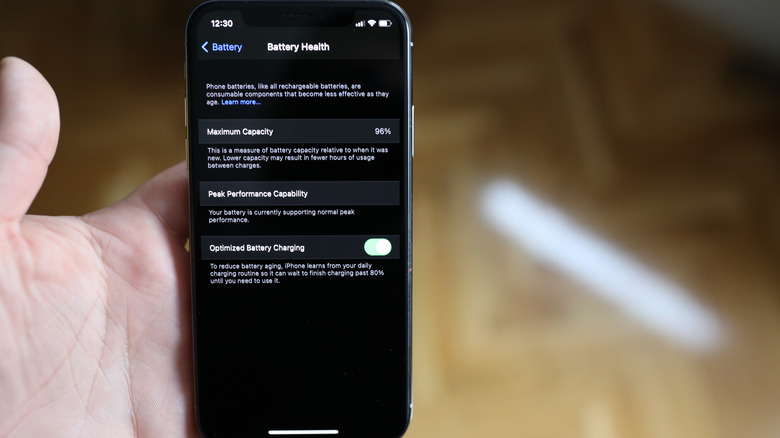
No matter its battery capacity, you can extend battery life by adjusting how you use your device. Keep the device updated to the latest OS, lower the screen brightness, shut down background activities you don’t need, and check which apps are draining your battery most. For long-term battery health, try to keep the battery between 20 and 80 percent as much as possible, rather than waiting until it completely depletes and charging up to 100 percent.
A battery will chemically age over time no matter what you do. Once the battery is at 80 percent capacity, it’s a warning sign that you should replace it. On many smartphones, you can check battery health percentage in the Settings menu under the Battery section. Yours might even send a warning notification when the battery is significantly degraded. But with normal use, it should last a long time. My iPhone 17 Pro, for example, is still at 94 percent battery health after 316 full charge cycles over the last year I’ve had it.
Some of the latest devices are switching to silicon-carbon batteries that can pack larger battery capacities into smaller spaces, so you don’t have to deal with a heavier or thicker device to enjoy long battery life. But it could be a while before these are mainstream.














Leave a comment